Pages

Saturday, July 8, 2017

Indigenous Science: Petroleum Jelly


   For the longest time, I never knew that Vaseline was a brand name. Much like Kleenex and Band-aids, Vaseline has become more or less synonymous with what is known as petroleum jelly. Petroleum jelly is used as an ointment and moisturizer that can be used to prevent skin chapping and dress wounds. I use it in my noise as a moisture barrier for when the air is dry I get nose bleeds otherwise.

It is also something that was developed by First Nations people. The following is from the Aboriginal Innovations Handbook developed by Lakehead Universiy:

Saturday, July 1, 2017

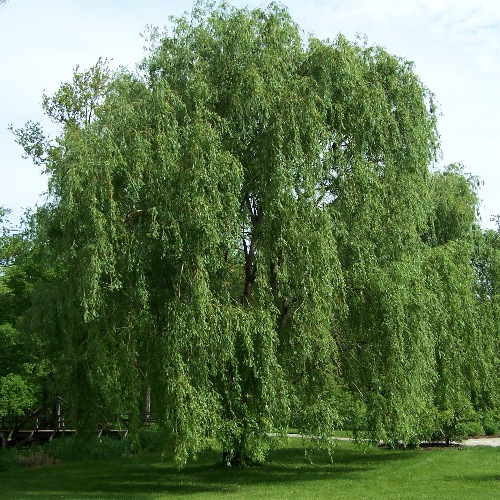
Indigenous Science: Willow bark as pain reliever

I once heard research about bears chewing on willow bark when they had been experiencing pain. The researcher was surprised to realize that willow bark was filled with ASA, an active ingredient in pain relievers. My Mom and Dad were not surprised as I was. Well, yeah, we know that. It was something that I didn't realize for quite some time. I later came across the handbook from Lakehead University called Aboriginal Innovations and showed it to my Mom. She was also not surprised, her Grandpa told her about willow bark ages ago.

Chief Dan George's "Lament for Confederation"


How long have I known you, Oh Canada? A hundred years? Yes, a hundred years. And many, many seelanum more. And today, when you celebrate your hundred years, Oh Canada, I am sad for all the Indian people throughout the land.

Sunday, June 18, 2017

Nation to Nation... Right, he Mutters Sarcastically


I have been trying to write a response to the comments made by Canada’s Governor General, David Johnston, regarding Indigenous peoples being immigrants to Canada (See the CBC Radio interview on The House or the transcription below by Jonathon Goldsbie of Canadaland), but I am not sure how to proceed. Mr. Johnston is following a straw man argument that is pulled up regularly by colonial governments and scholars who are trying to reinforce the idea of Terra Nullius, or the idea that these lands were uninhabited and therefore open to settlers to control. In this case, they argue that the Indigenous claim to the land over settlers is invalid because we too are immigrants, albeit several tens of thousands of years earlier. I first encountered this argument in the book First Nations, Second Thoughts by Thomas Flannigan, the long discredited but still influential former advisor to Prime Minister Stephen Harper, whom appointed Johnston. I say it is a straw man argument because it has no validity, particularly in light of the face that several tens of thousands of years of occupation means you are no longer an émigré and even if it were, stealing the land of another émigré is counter to the whole legal tradition Canada claims to adhere to. 

Regardless, the fact that this is continually brought up, in this day and age, and by Canada’s Head of State, is very problematic. While he may not have many official powers, he is the Head of State and the signatory on all laws that are passed and given Royal Assent. What he says matters, whether we like it or not and he is downplaying Indigenous peoples, our rights and our claims to sovereignty over our lands, unceded or otherwise. That he says this days after the current Prime Minister signed a problematic Memorandum of Understanding with the Assembly of First Nations, a lobby group, to ostensibly renew a nation-to-nation relationship with First Nations just furthers the view that Canada is only paying lip service to their statements and promises to First Nations and other Indigenous peoples.

Like I said, I don’t know what to say from here. 


photo courtesy of @goldsbie on Twitter

Monday, June 12, 2017

Seduction, Complicity, Outrage, Repeat: Some thoughts on the AFN/Canada MOU


The more things change, the more they stay the same. June is Aboriginal History Month and is being subsumed by the overwhelming, and annoying, Canada 150 activities and preparations, while the Canadian government is continuing to not do the right thing while promoting how they are doing the right thing. The difference, of course, is this is Mr. Trudeau and not Mr. Harper, which seems to be a surprise to everyone except those of us who have ever paid attention. The Canadian government has always acted against the interests of First Nations people, regardless which of political party has been running the show at any given time. Trudeau promised a new relationship, a Nation-to-Nation relationship with First Nations. As per the norm, this is proving not to be the case.

Sunday, June 11, 2017

REAL, INDIGENOUS PEOPLE! Some Brief Reflections on Wonder Woman, Thunderheart & (sort of) Teaching


Inside the behemoth hit film, Wonder Woman, a welcome and long overdue newcomer to the all-white male movie superhero landscape, stands a supporting character known as Chief, portrayed by Blackfoot actor, Eugene Brave Rock. By all accounts, the character is not just another caricature, Brave Rock and director Patty Jenkins were allowed to create a real, complete character even for the supporting role he was playing. The character is complete beyond stereotype. Irritatingly, the last Native character I saw in a superhero film was Adam Beach’s role in Suicide Squad and he emerges from a car, hits a woman and says she deserved it. I haven’t had the opportunity to see Wonder Woman yet, I really want to but am watching my money at the moment. It will be the first one I see when I can.

Saturday, June 10, 2017

Particular Relationships: Some Belated Thoughts on the #appropriationprize


I had been contemplating, for some time now, a return to writing and blogging. The itch was there and needed scratching, my last post on my education blog, Where Are the Sheep, having been in early 2014, with a short one-off in 2016 addressing the whole Boyden thing. The itch had been tempered by a number of challenges, not the least of which was the feeling that I had very little to say and the acknowledgement that there were, and are, others speaking much more articulately and thoughtfully than I ever was ever able. Further to it is the ongoing challenge that I have witnessed this past week in social media and Canadian mainstream media: the ongoing effort to marginalize and silence Indigenous voices that speak out. A contributing factor to my hiatus from blogging was the angry, mainstream, usually white, voices that pushed back rather violently against us when we presented our epistemologies and views online, in the classroom or anywhere that the dominant Canadian colonial worldview and understanding has been maintained and encouraged. I was driven out because I could not emotionally handle that silencing. I worry that I still can’t, as evidenced by my limited attempts to engage online beyond a lot of retweeting and article sharing, choosing instead to let other voices carry the flag. This violence pushed me out of my teaching career and into my currently fledgling film career. I still want to have a voice and say what I need to say but I am still looking for the right way to do it.

Thursday, December 29, 2016

A Very Incomplete Thought on the Whole Boyden Thing

Why does this whole Boyden controversy matter? Why are we so obsessed with this whole identity thing? I wish I could say it doesn't but unfortunately that would be a lie because we live in a society that seeks to categorize us by who we are or aren't and permits us our identity as Indigenous peoples within some narrowly defined parameters. Parameters that are defined by the Settler Canadian majority and impressed upon us by their acceptance of the few voices that non-Native Canada chooses to privilege with "authenticity." The rest of us are forced to defend our own Indigenous authenticity to non-Natives in constant, repeating cycles while those granted a voice are permitted a straight course of acceptance within Canadian society. As a result, when we, needing to decide regularly if we want to go through the fight again and again, see inconsistencies in the one privileged by Canada with a voice, we want to question said inconsistencies because that free pass he has may have been granted as a result of him being the Indian they want, not the Indian we are.

Monday, March 17, 2014

Permission: Why Cowboys & Indians and Tiger Lily Matter

What was fun about teaching was being able to experience the sense of discovery over and over again. You learn with your students and as they have that spark that brings the fire into their eyes when they engage with their learning, you also feel that spark and you learn something new about what you are teaching as the new perspective brings new knowledge, new understanding, new questions and new wisdom. From the grade two students looking at the little frogs in the classroom aquarium asking questions, I never even thought to ask, about frogs- driving me to look it up with them to share in our learning as students together- to the teenager putting forth her hypothesis on why the Indian Act has evolved the way it has- approaching it from an Indigenous-Feminist viewpoint- I have always come away from the encounter with a new understanding, a new thought, a new appreciation. I hope that it has been the same for my students.

Scrolling the vastness of social media, I have watched an interesting evolution that has been a learning experience for me, but I have wondered if it has been for those that I have interacted with. Seeing the news on Indigenous issues today feels like deja vu. Stories today remind me of stories I was writing about two years ago, only the names have been changed. Two years ago, it was Gwen Stefani and Victoria's Secret and Tonto. Today it is the daughter of the Governor of Oklahoma, the University of Regina Cheer Squad and Tiger Lily. The commentary is the same,  the comments are the same: "get over it," "over-sensitive," "PC police," "it's all in good fun," and on and on and on...

Friday, February 28, 2014

An Incomplete Thought On Letting Go

I have wondered what I am going to say when this moment arrived. I have, admittedly struggled with this decision and worried at length that I am abandoning my principles and my convictions. I had hoped I had something deep and meaningful to say, some powerful statement to offer up as a remembrance of my thoughts but none occur.

Today is my last real day as a teacher. I haven't worked as an educator in a classroom in nine months and have been unaffiliated with any school district for the past six. This date marks the end of my membership in the BC Teachers' Federation which means, essentially, I'm just some guy now.

I spent four of the past ten years teaching in a classroom, one year as a First Nations Support Worker and six years waiting for calls to work. Basically, on one level, I can't afford to teach anymore. On another level, the challenges, many students I worked with, faced took their toll on me and I found the need to take breaks to try and recover my own health. I struggled, and continue to struggle, with depression and it takes a lot of the fight out of you. Add to this, the politics of working in district and the challenges imposed by the BC government and I found myself losing ground and my own identity.

Friday, January 24, 2014

My Brother's Book, Tales From Indian Country: The Apple, Now Available!

Hi everybody!
Just wanted to drop an announcement on you! My brother has published his first novella, TALES FROM INDIAN COUNTRY: THE APPLE, and I encourage you to check it out. He is a very talented writer with two of his screenplays having been produced (TWO INDIANS TALKING and JOHNNY TOOTALL). TWO INDIANS TALKING won the audience award for Best Canadian Feature at the Vancouver International Film Festival a couple of years ago. He also co-created and produced the Leo Award-winning TV show BACK IN THE DAY (airing on APTN in Canada and FNX in the United States).

From the Press Release:

Tales From Indian Country: The Apple

Seven Short stories throughout the life of an Indian man that's considered an 'Apple' to his reserve, red on the outside but white on the inside. These stories chronicle his attempt to be more accepted by his community by going on a vision quest, his time dating a spiritual person, the time he played poker with a dying racist man; and the time as a ten year old that he discovered residential schools. It's an overall story about a man that struggles with how he sees himself and how others do.
About the Author
Andrew Genaille is a First Nations writer living in Canada; to date he's written several feature films including "Johnny Tootall," and "Two Indians Talking," which won the Audience Award at the Vancouver International Film Festival. He also wrote and produced with his siblings the documentary series "Back in the Day." for the Aboriginal Peoples Television Network.
Check it out here:
It's available as an E-book at
 
or as a soft cover book here at Amazon:   http://www.amazon.com/dp/1495291391
It is coming soon to iTunes.
 
Please support Indigenous talent in arts & entertainment!
 
PS   I made the drum on the cover.

Sunday, January 12, 2014

A Couple Thoughts on Teach for Canada and the First Nations Education Act


Randomly fascinated by the discourse on Twitter and in some blog posts about the whole “Teach for Canada” idea that seems to have captured the imaginations of many educators and non-educators alike. Can this upstart organization come into our most vulnerable communities and turn around the huge failure rates and high turnover of teachers? I am going to step aside from the whole debate about whether teachers can be good teachers with or without training, it is being well-argued by better people than me who have fallen into two camps: “Lefties” and “Righties.” One blog, admittedly argues that the founders of TFC is small-L Liberal, whatever that means, but that really is irrelevant, as is the left wing versus right wing discourse. Political spectrum has very little to do with this issue and that has to be realized and understood by all.

Teach for Canada identifies those most vulnerable communities as First Nations communities and, in so doing, makes the same mistake that the Conservative Government made with the First Nations Education Act: failed to ask the First Nations what we want. While it is unfair to compare these two notions to the residential school experience, I do not believe it is unreasonable to be suspicious of their motivations. I am under no illusion that the altruism on display is completely selfless. Teach for Canada is out to make money from what I can understand; the government, to impose their agenda and ideology on First Nations (I’m guessing, but when you say reform before funds when many of these schools would be condemned buildings anywhere else…). Both seek to supersede agreements already in place with First Nations in order to carry out their plans. Both claim Indigenous supporters but both choose to ignore the majority voice that has ascribed to ideal that we have a say in how our children are educated and the old paternalism is not acceptable.

The feeling I get when I read all of these posts and tweets and articles and websites and legislation is that an outside party has decided they know what is best for “our” First Nations and they will supersede the will of First Nations in order to save them. We are not Canada’s First Nations. We do not devalue education, we seek education that is relevant to us, which is reflective of our worldviews and which is useful to our needs and wants. We need to be free from silencing and to be allowed to present what we need and then supported in accomplishing the idea, not condescended to and patronized. I wish I could say that this was limited to these national institutions but I have experienced silencing at all levels of the education system. The belief that we do not know what is best for ourselves or our children appears to be one of the most entrenched conventions in Canada’s history.

Both groups approach Indigenous peoples from a much generalized perspective, one couched in white privilege and not respectful of the inherent differences in 600 First Nations in Canada. Assumptions about the needs and, more importantly, the wants of First Nations people have been made and they have been made from the perspective of a privilege that is not “ours” but “yours.” The entire conflict around Idle No More and the pipeline/fracking protests continues to confuse and infuriate the government and many Canadians because they refuse to understand that the values of these cultures (Plural!) may not be the same as the values of the government or Canada, which is looking at the issues economically. It is not a right wing or left wing political spectrum thing but a values choice couched in a worldview that has little to do with politics.

The relationship is what is important. Our relationship to ourselves, to others, to the land. I hear the voices, “here we go again…” but that is why there is misunderstanding. \the Stó:lō live on the river, depend on it. The sockeye are our forefathers, they are our primary source of food. Without them and without the river, we die out. A poor run in a year and families go hungry, even in the “rich” Fraser Valley. Damage to the river or the land around it damages my home. The river is a source of our economy and our education. No one has figured that out. I can learn biology on the river. I can learn earth science on the river and the surrounding land. The river is the source of many of the stories that make up our history. The first white man in these parts arrived on the river. The river is central to our lives and could be a central part of our education, but nobody asked because no one cares about that and no one is interested in looking past the saviour complex and actually addressing what we need and want.

Monday, January 6, 2014

That Eleven Facts and Questions Everyone is Doing


Hi folks. Playing along, not sure why but @starleigh_grass sent this to me so I thought "well, I've got nothing better to do..." It has been flying around the PLN and I've been seeing it everywhere. So here for your entertainment and edification:

11 random facts about me:

1. Growing up, I wanted to be an archaeologist, not a First Nations archaeologist but a "Classical" one, Roman, Greek and Egyptian, perhaps Aztec and Mayan. I want to learn how they lived through their material culture. I found it all fascinating. Barring that, I was interested in paleontology because dinosaurs are awesome.

2. I love reading and it is one of my favourite ways to pass the time, even though I haven’t been able to in a long time. I read it all: The Hardy Boys, Alfred Hitchcock presents The Three Detectives, Robert Ludlum, Tom Clancy, Michael Connelly, and Jim Butcher. I devoured books as a kid.  I devoured books on archaeology particularly and there was a time when I would be visiting the library every day.

3. I’m sort of tired of the whole superhero comic book movies playing right now. I wouldn’t mind the film world exploring some other comic or graphic novel stories, something other than a superhero story would be nice.  Also tired of zombie movies and found footage stuff. Why do I say this? Why not.

4. I’ve been disillusioned of the whole education system for some time now. I find it talks a good game on Aboriginal Education but I have a hard time seeing anything real and concrete happening. While there are things that are being done and they are great, the real necessary change at the institutional level is not happening and I don’t believe that any real transformational change is going to happen any time soon.

5. I wanted to be an actor when I was growing up and my undergraduate degree is in Drama and History. I never took the risk of going to the city to try to get work, either Edmonton (near where I went to school) or Vancouver. I live with regret on that particularly because it is something I continue not to do. One of my professors in my final year said something to me that caused it all to crash down: “Bob, you’re a good actor, but you’re uncastable.” After that, the plan to move to the city and get an agent or start the theatre company didn’t have the same urgency.

6. I consider August 29th to be a second birthday right now. On this day in 2013, I signed my resignation letter and left my school district. I am unsure whether I will be continuing as a teacher as yet, but that decision is one that I am happy with because it was not just a letting go of an unhealthy work relationship but it was a stepping out of my comfort zone on many levels, including a small attempt to be more social, some attempts to move forward with some film ideas, the taking of a holiday that threw me into some new experiences that I will always cherish. So, while I am currently unemployed (although I can argue self-employed with the film company) and poor, I am happier than I have been in a long time. Going to need to look for work soon though ;)

7. My favourite movie is Ghostbusters.

8. I often wonder if I am missing something but since it isn’t in my life I also wonder if I am just overthinking it.

9. I have always watched Doctor Who in some way, with my Mom and with my Grandpa.  Of the Classic Series, the Fifth Doctor was always my Doctor, controversial I know, but not all of us were enamoured of Tom Baker.  He was good, yes, but Peter Davison was the Doctor I remember.  I've never seen the 1996 movie, I'd like to but it just hasn't ever been around for me to see.  I never watched the new show when it debuted seven years ago with the Ninth Doctor, just wasn't interested, I was too busy with my balancing act, two disparate "careers" and graduate school in the evenings.  I never gave it a second thought and, from what I hear, that was a good thing: at the time it aired on CBC here in Canada and they were allegedly brutal with their edits. A couple of years ago, I took a leave of absence from my job and stopped trying to run my small business. I was diagnosed with severe depression and anxiety. One of the things that I did in my “recovery year” was to start watching the new series of Doctor Who and I do believe that it is important because it made me feel better.  I have always tried to look at the world with wonder and I had lost that.  Watching the Ninth, Tenth and Eleventh Doctor save the Earth, get in trouble, get out of it, deal with their past and always look at the universe with a sense of wonder... well it helped.

10. I am not a strong practitioner of any of the traditional activities or ceremony events of either of the Indigenous cultures that I am a part of. This is not because I am “colonised” or “inauthentic.” I am happy with my current level of participation, I have been active trying to create a better tomorrow for our youth through the education system and through the television projects I have carried out. I buy into Thomas King’s pronouncement at the end of The Inconvenient Indian that Native people want the right to live their lives in the way that they choose and I am trying to do that, so the fact that I don’t smudge, or sweat or fish or whatever does not make me less Indian. I have made choices on where I want to focus my energy. Please respect that as I am respectful of your choices.

11. I love Las Vegas, but I want to go to the Skywalk at the Grand Canyon.

11 questions from Starleigh:

1.       What element of your personal background most influences your teaching?

I was very unhappy with my high school education (drama class notwithstanding), particularly the lack of representation of First Nations’ experience and what felt like a bias against it in my learning. I think I take that forward with me in my teaching experience.

2.       What's the most memorable classroom activity you experienced as a K-12 learner?

When I was in grade 4 in CFB Kingston, Ontario (Dad was a soldier), I was sitting in class waiting to learn about the Native peoples of British Columbia and the teacher was excited and talking about how we had a special guest coming in to talk about his tribe and culture. In walks my Grandpa.

3.       Who is your educational change role model?

Sorry Starleigh, it’s you. It was your encouragement to try out the blogosphere and your willingness to share your work and experience has been inspirational.

4.       Which professional learning event/organization has made the biggest difference in your practice?

None really. I want to be able to say FNESC or BCTF, the Ministry, something, anything but I haven’t found anything that has inspired me in my practice. I’m very interested in the Aboriginal focus schools in Prince George and Vancouver but I haven’t heard anything recently about them and I haven’t been so affected as to have it make a difference in my practice. Silencing plays a huge part in that, I suspect.

5.       What actions do you take to combat racism?

I try to explain its effect on the victim and to teach the historical oppression behind the racism as expressed. I am not strong at calling it out when I hear it from a student as it has been generally directed at me when I have heard it.

6.       Why do you blog?

Peer Pressure.

Well, no, it’s an attempt to share my understanding of Aboriginal Education, why it matters and some ideas on how to change the system.

7.       Who's traditional territory do you currently live and/or work on?

I live in the community of the Peters First Nation, my home community. We are an independent Band of Sto:lo people. I am unemployed currently, except for the film company (which is unpaid) and I do that stuff on my reserve.

8.       How would you describe your interactions with the first peoples on whose territory you currently live and/or work on?

Complicated and tiresome.

9.       What is one thing that you started in 2013 that you hope to complete in 2014?

My redefinition of my life.

10.   What is one thing that you hope to do differently and/or better in 2014?

Oh, so many things. Pursue some of my dreams as opposed to ignoring them all the time.

11.   What were you doing ten minutes before you got onto your computer?

Rearranging furniture.

I am breaking the chain because I see much of you educator types have done this already and I am tired and don’t want to think of any questions. Sorry.

Friday, December 6, 2013

An Incomplete Thought on Mr. Nelson Mandela

Words sort of fail me sometimes.  I am at a loss how to process the passing of Mr. Nelson Mandela of South Africa.  I understand that he was 95 and so it was expected at some point but I am still in a state of confusion over how to proceed with this post.

Nelson Mandela was a leader of the African National Congress and fought to end apartheid in South Africa (something that was actually modeled on the Indian Act/reserve system of Canada, but I digress), spending 27 years in prison and becoming the first Black president of South Africa.  He fought oppression, for human rights and to be dignified.  He was, and is, a person that managed to inspire hope in a heck of a lot of people.

I am disappointed in some of the stuff I have read online about his "terrorist activity," including claims I have been unable to find any corroborating statements or evidence to support.  I don't know what to make of this type of stuff anymore.  I saw similar stuff after Elijah Harper passed away and any number of people who stand up to oppression and I find myself always just feeling disappointed with humanity in general.  Fortunately it has been in the minority but it is still there.  I have often wondered how Mr. Mandela endured what he has endured and what kind of fortitude was required to move both himself and his nation into a revolution that would bring down the old regime and rebuild it as something better than apartheid.

"I have no epiphany, no singular destiny, no moment of truth, but a steady accumulation of a thousand slights, a thousand unremembered moments, produced in me an anger, a rebelliousness, a desire to fight the system that imprisoned my people."

As the ongoing struggle here in Canada, on the land and in our education system, can attest, the work that Mr. Mandela did is far from over.  Oppressed people the world over have looked to him for inspiration, looked to his compassion and his honesty in the post-apartheid years as a means to remember and hold on to our own humanity.  He sought justice.
 
Rest In Peace Nelson Mandela.  Have a safe journey.  You will be missed.

Thursday, November 7, 2013

Why Aboriginal Veterans' Day Matters: A Remembrance

You remember in army cadets that one time, you were on exercise and the troop was given the task of building shelters. You were handed rope and tarp and other little essentials with which to carry out the project.  Your Dad, one of our instructors, then came up to you and took everything away.  You protested but he silenced it when he said "What are the odds you will have everything you will need to survive?"  No one explicitly said this is how to build a shelter, but as you stood there, your Dad nudged a broken branch with his foot and always sort of stood near the next piece of the puzzle, making you figure it out on your own, although  you realize now that you were never alone.  By the end of it, you had a full audience of cadets and instructors who applauded the completed (but far from perfect) shelter.  The only response that mattered was the soft "Well done" from your Dad.

Your father was Saulteaux and Métis-Cree and he joined the Canadian Armed Forces when he was seventeen, an Engineer, though, for the life of you, you can't remember which Corps. In this career, he served in Gagetown, Chilliwack (where he added a wife to the army life and you as well), West Germany back when there was a West Germany, Chilliwack, Esquimalt, Kingston, Borden, Vancouver and retirement. While serving, he also worked as a radio deejay and a television commentator. He taught in the army cadets.

Not content to retire, he joined the RCMP and continued to serve, taking a special interest in seeing that the Aboriginal youth in his posting were treated fairly. He started the Seabird Island Army Cadets to give them something to do (it saddens you to see the Native youth were forgotten and abandoned by the Corps after his passing). You remember one night, after a long shift as a night security officer at the provincial park, he pulled you over, full sirens and everything, only to be told to "Call your mother, she hasn't heard from you in days."

One night, right before Christmas 2002, he went out and never returned. He died of natural causes but he died in the line of duty. He is and was a veteran. He served.

Every year, you remind anyone who will listen to acknowledge and teach about Aboriginal Veterans' Day. You do it for Cst. Vernon Genaille and all the others who step up to serve. They choose to serve for many reasons: to escape the Rez, to protect their ancestral homelands, to honour the treaties, because they believe in something better (hard to understand when you think of how Canada is treating First Nations at the moment). They served in hostile environments within their own countries, their own units. They watched the military deployed against their own people on some occasions. On Friday, you will put out some tobacco, take a moment of silence and then continue to look for, in your role as educator, as filmmaker, as blogger, that better tomorrow you are sure he was working on creating. And hopefully, someday, you will hear a soft "well done" in that space between sleep and awake.

BCTF Survey of Teachers Self-identified of Aboriginal Ancestry UPDATE: *DEADLINE EXTENDED TO NOVEMBER 20*

The BC Teachers' Federation has put up a request inviting teachers, who self-identify as having Aboriginal ancestry, to complete a survey to help the Aboriginal Education Advisory Committee (I used to be a member) determine a) the needs of Aboriginal teachers, b) how they can be supported and c) get an idea of the numbers that are currently in our education system.

From the site:
"The purpose of the survey is to collect data that will assist the BCTF in providing support and encouragement to Aboriginal teachers. The information will be used to guide the BCTF in ways to provide support to new teachers, to assist current teachers in their work, and to support the planning and implementation of employment equity for Aboriginal staff throughout the education system."

I hope that, if you self-identify, you'll consider checking out and completing the survey. There is so much support needed that we do need to find out how to build our community.

The survey can be found here: http://survey.bctf.ca/AboriginalEducators2013/2013-survey-of-teachers-of-aboriginal-ancestry.htm

Tuesday, November 5, 2013

Call for Articles for English Practice: Starting a Circle

When we move into a circle, we are moving into a space where there is no hierarchies, no boss and employee, no teacher and student.  In a circle, we are all on the same level and all are offered the same opportunity to contribute and to share, with the larger group, our experiences and truths.  Generally, we pass around something considered imbued with power, I usually use an eagle feather but I also have a pouch of stones that are meaningful to me (and, as such, have power) as well as talking stones, talking sticks, something with meaning.  We pass the object around and we share, in safety.  A circle can be used to just share but it is also a place where we can learn, a place to explore what we know and what we want to know. 

Which is why BCTELA's journal, English Practice, has titled its next issue Starting a Circle: Exploring Aboriginal Education.  I am guest co-editing this issue and would like to invite you to submit articles, lesson plans, reviews or arts and literary based pieces on this theme.  From the BCTELA website:

Spring 2014. Theme: Starting a Circle: Exploring Aboriginal Education
This issue is devoted to exploring the vital importance as well as challenges of integrating First Nations, Métis and Inuit perspectives, voices, texts, curricula and teaching and learning practices within English Language Arts. We invite educators and scholars from British Columbia and beyond to explore significant issues arising from landmark events and curricular shifts in BC, which reflect larger questions related to the future of Aboriginal Education and English Language Arts.

In October 2013, the Truth and Reconciliation Commission held a national event in British Columbia, and the TRC Education Event drew more than 5000 students from across BC. What does reconciliation mean in our classrooms? How can we support students in finding their role within reconciliation? What legacies of residential schools remain in BC schools and beyond, and how can we as Aboriginal and non- Aboriginal educators address these in our practices?

The inclusion of Aboriginal focused outcomes in every subject and at every level is an important element of change to the BC curriculum. How do we increase our ability to integrate Aboriginal content throughout our educational practice? How do we work proactively as a professional community towards these ends?

In British Colombia and elsewhere, the graduation rate for Aboriginal students continues to lag far behind non-Aboriginal students. Aboriginal students are overrepresented in courses such as BC's Communications 12 course, which offers a modified pathway towards graduation. What approaches support engagement, inclusion, powerful outcomes and greater success for Aboriginal learners in English Language Arts? What practices support increased Aboriginal graduation outcomes?

BC has one the most innovative Indigenous literature courses in the world - English First Peoples 12 - which utilizes engaging texts, is founded on the First People Principles of Learning, and is supported by a teacher's resource guide. Yet only a few hundred students take this course each year. How do we meaningfully and ethically integrate First Peoples' texts and curriculum into our practices? What barriers and tensions exist and how do we address these?

Closing date: February 15th, 2014.
Contact: Robert Genaille
rvgenaille@hotmail.com, or Pamela Richardson pamela.richardson@ubc.ca

Below is the criteria for the journal, which can also be found on their website, www.bctela.ca.

Criteria for English Practice

English Practice provides you with the opportunity to write and be read. Your viewpoints, lessons, opinions, research (formal or informal) are welcomed in formats ranging from strategies, lesson plans and units, to more formal compositions and narratives exploring big ideas in teaching and learning, to creative writing.
English Practice publishes contributions on all facets of language arts learning, teaching and research, focusing on the intermediate, middle and secondary grades. The journal offers teachers of a practical, user-friendly guide to research-based practices.
We have four sections with the following guidelines to assist you in preparing and submitting your writing:

Teaching Ideas (teaching strategies, lesson plans, unit plans)
Articles should
:
  • have a clear purpose (i.e. articulate specific learning goals for students)
  • acknowledge your perspective/background/role (i.e. grade 6 teacher; have used reading workshops for 10 years; trying to embed more targeted strategy instruction in my teaching)
  • provide a description of instruction that outlines how modeling or scaffolding is used
  • offer specific classroom practices that are grounded in research (backed up with current thinking, research reference(s))
  • be well organized and clear
  • ensure that any student samples, graphic organizers, and/or handouts are readable and reproducible
  • ensure that formative and summative assessment are aligned with instruction 
  • include information on any student and/or professional resources that may be useful for readers
  • include a summary and/or reflection
  Investigating Our Practice (action research, reflection on practice over time, narrative)
Articles should:
  • introduce and outline the purpose and process of inquiry
  • explore a big idea in teaching and learning over time
  • acknowledge your perspective/background/role in relation to issues, big ideas, and/or inquiry question(s) (i.e. "I believe in democratic schooling, but I hadn't recently looked at how what I do was or was not working"; "I have been teaching for 18 years and oral language has always been important to me. However, I want to know how I can help my students actually improve their speaking and listening abilities.")
  • include reflections made before and after the teaching practice
  • typically be narrative in style
  • relate your own thinking and practice to current thinking and research
  • be well organized and clear
  • include synthesis and/or next steps 
  • include a list of references in APA format
Salon (literary and arts-based explorations, or opinion pieces)
Pieces should
:

  • be related to teaching and learning, curriculum theory and philosophy, language and literacy, or English language arts
  • use form effectively 
  • be engagingly written (first person, present tense, ideas are effectively linked and language choice heightens meaning)
  • acknowledge your perspective/background/role, especially in opinion pieces
Check This Out (includes reviews, announcements of contests and conferences)
Articles should

  • acknowledge your perspective/background/role (i.e. teach grades 9-12 English; looking for novels related to the theme of...; "I am always looking for new ideas related to diversity in the classroom")
  • have clearly explained and supported ideas and/or opinions
  • Book, website, or other resource reviews should include a target audience and some ideas for application in the classroom.
  • Authors must not have a personal or a financial stake in what is being announced or reviewed.
I am honoured to have been asked to be a part of this project with the BC Teachers of English Language Arts and look forward to hearing from you and reading your submissions.

Tuesday, October 15, 2013

When we have agency: An Open Response to John Richards' Commentary in the Vancouver Sun, October 15, 2013

Traditionalist.

Such a loaded word. What springs to mind when you hear the term? Mr. Richards seems to be implying that a "Traditionalist," at least among the Chiefs of the Assembly of First Nations, to be someone opposed to progress and someone opposed to improving the education outcomes of Aboriginal students across Canada. Mr. Richards' defence of the Conservative Government's work on Aboriginal Education, Tories get no respect on native file (http://www.vancouversun.com/touch/story.html?id=9036464 ), is misleading at best, outright prejudicial and designed as propaganda at worst. Interesting tactic considering the presence in Canada of the UN Special Rapporteur investigating this country's treatment of Indigenous people. Mr. Richards has launched an attack on First Nations while promoting the work done by the government to improve education outcomes in spite of our opposition to their work.

He works hard to frame the business of government as a progress that is needed despite Tradititionalist opposition, without defining what Tradititionalist means. In addition, he argues that this legislative answer is the best way forward, citing British Columbia's somewhat "better institutional arrangements for aboriginals students - both on reserve and in provincial schools" as a possible reason for our better outcomes here than in other provinces despite the fact that the First Nations Education Steering Committee (part of our institutional arrangement) is opposed to the First Nations Education Act.

Yes, Mr. Richards, it is easy to mock past policy, and many are, but the opposition from these "Traditionalists" has more to it than that. Traditionalist is not one opposed to progress in this case. The term is outmoded and boneheaded. A traditionalist is one content to continue to let the government arbitrarily rule our lives as wards of the state. Past policy isn't mocked here, it is brought up as a reminder to all that if we are to improve education outcomes, we need to have agency in our own lives. Nowhere is the lack of real consultation with the people who will be directly affected mentioned in this article. Nowhere is the needs addressed or considered. I would argue that these "Traditionalists" are progressives in that they demand agency, a say in the way they will live their lives and succeed within Canada.

I am a teacher. I am First Nations and a member of an Indian Band. I live on my reserve. I have taught in public schools, and in a reserve school, at all grade levels and in a wide variety of class compositions, class sizes and I have taught many different types of courses to many different types of learners. I have a Masters degree in Education. What I have learned in all of this is that we are finding our way by taking control of our education. What I have learned is that a student finds that fire to learn and succeed when he or she sees themselves reflected in their learning. When they have agency.

The FNEA takes away that agency in their communities. A school board type system might be the answer, I do not know, but cutting us out of the process is condemning us, and our students, our children, to further marginalization because you are removing our power to decide for ourselves. I tell my students that they do not have to give up a part of themselves to succeed in Canadian society. How do you resist assimilation? Resist by succeeding. Resist by learning to live in both worlds without giving up who you are. The FNEA is telling them that they have to give up a part of themselves, their agency, to succeed because you are taking that away from their parents, their communities.

And that is unacceptable.